
Best Thrift Store Categories to Resell: What the Data Says
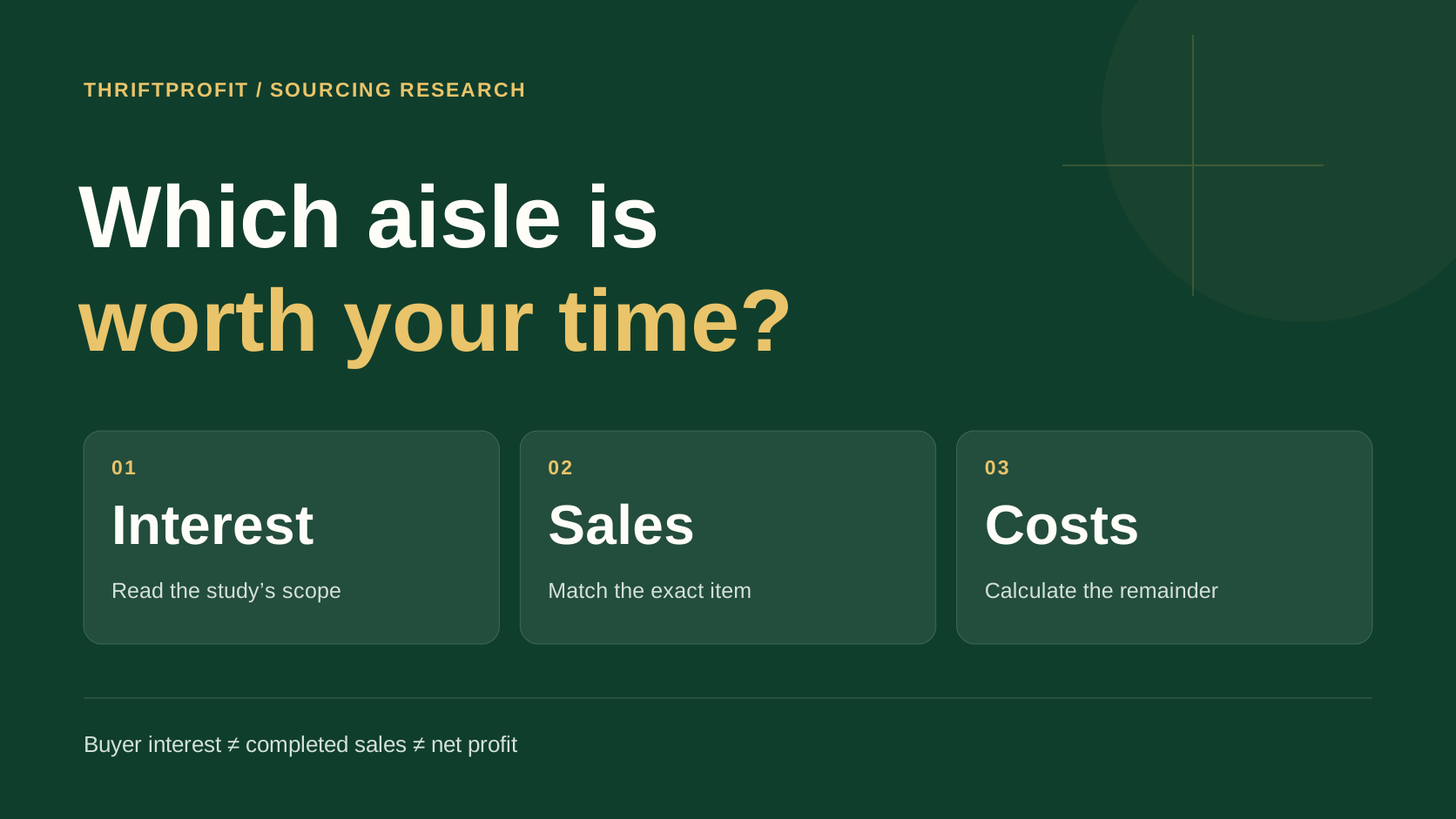
Clothing, books and electronics are sensible thrift categories to investigate, but published buyer-interest data cannot rank your likely profit. Start with a category you can identify and inspect, verify comparable completed sales, and subtract all costs. The best category for your store depends on local buy prices, condition and demand.
The busiest aisle can still be the wrong aisle for your business. A popular category is easy to overpay for; an obscure item can be expensive to test, pack or store. The useful question is which category you can research accurately and sell with enough money left over.
Our existing clothing sourcing guide helps you inspect racks. This guide answers a different question: what does published data actually tell you about choosing between departments?
What does actual resale research show?
The 2025 eBay Recommerce Report reports these category figures in its Japan findings:
| Category | Percentage reported in the Japan findings |
|---|---|
| Clothing | 42% |
| Books | 40% |
| Tech and electronics | 34% |
These are consumer purchase-category findings, not US thrift-store sell-through, revenue shares or profit margins. Categories can overlap; do not add the percentages into a market-share total.
The report's external research covered approximately 16,020 consumers in nine countries, with fieldwork from August 25 to October 9, 2025. That is the overall survey sample, not the Japan subgroup size. Participants had bought or sold pre-owned goods. The source does not provide the subgroup base alongside these three figures, so we do not infer precise differences between categories.
Our interpretation: these departments merit item-level investigation. The survey cannot tell a US reseller which rack will generate the highest net return. No category profit league table follows from these numbers.
Which thrift categories should you investigate first?
This is an editorial inspection matrix, not a ranking. Begin where you can resolve the biggest uncertainty before paying.
| Category | What makes an item searchable | Main cost or failure to check | Next step |
|---|---|---|---|
| Clothing and outerwear | Brand, style code, material, size | Hidden damage, measurements, cleaning | Inspect seams, labels and high-wear areas |
| Shoes | Model code, size, colorway | Sole deterioration, wear, missing parts | Check structure as well as appearance |
| Books | ISBN, edition, publisher | Wrong edition, missing pages, heavy shipping | Match the exact copy and weigh it |
| Small electronics | Exact model and included accessories | Untested functions, battery condition, locks | Verify functions and shipping requirements |
| Games and physical media | Platform, region, edition | Scratches, incomplete cases, missing components | Check completeness and playback where possible |
| Homewares | Maker, pattern, dimensions | Chips, breakage and packing costs | Price the packed shipment before buying |
| Designer accessories | Exact model and documented provenance | Unresolved authenticity, specialist costs | Resolve authenticity before listing |
Recognizing a brand is only the start. A technical shell with failing seam tape, a book missing its maps and an electronic device that powers on but does not work all need different comparables from complete, working examples.
For designer finds, use the red-flag screening checklist. It helps organize research; it cannot authenticate an item.
Why the highest sale price can be the weakest flip
Illustrative example, USD. Consider two hypothetical purchases. Shipping is included in each sale price, and the expense figures are assumptions, not marketplace fee quotes.
| Input | Jacket | Fragile homeware |
|---|---|---|
| Sale price | $45 | $70 |
| Acquisition cost | $8 | $20 |
| Selling fees | $7 | $11 |
| Shipping and packing | $10 | $23 |
| Profit before tax, labor and overhead | $20 | $16 |
The $70 sale leaves less money, before accounting for possible breakage or returns. This does not prove jackets outperform homewares. It shows why sale price alone is the wrong ranking criterion.
Run a conservative scenario as well: a lower sale price, an extra packing expense or a partial refund. If one ordinary complication removes the margin, the buy price is too close to your limit.
Build a category comparison from your own data
A small, consistent log is more useful than another unsourced “top ten.” Use a fixed research method and keep both purchases and passes visible.
- Choose narrow groups. Compare specific types of jackets or specific book editions, not all clothing against all books.
- Set one research window. Record the dates, market, condition filters and query used for each item.
- Verify comparable sales. Use eBay Product Research and keep asking prices separate from sold prices.
- Check competition consistently. Name your sell-through formula and retain the counts behind it.
- Log full costs. Include preparation, specialist checks, packing, shipping and selling expenses.
- Track outcomes through one cutoff date. Include returns and unsold items. Do not report only your successful flips.
A manageable pilot might follow ten purchases in each of two categories. That is an editorial starting suggestion, not enough for a market-wide conclusion. Give each item the same follow-up period and record listing delays separately.
Compare net profit per sold item, cash still tied up in unsold stock, preparation time and return costs. A category can look excellent if you hide the boxes that never sold.
Make your next sourcing trip a test
Pick one department, one inspection checklist and a maximum spend you can tolerate leaving in inventory. Use a written pass reason: no comparable sales, unclear identity, unresolved authenticity, excessive packing cost or insufficient margin.
Download the sourcing checklist. For books, continue with which books are worth reselling. For clothing, use the thrift-store inspection checklist before calculating a purchase ceiling.
Thrift Snap focuses on clothing, shoes and accessories. This broader category guide does not mean the app tests electronics, identifies collectible book editions or authenticates designer goods.
How we checked this
We checked eBay’s 2025 Recommerce Report, including geography and survey dates, and its Product Research documentation. This is an evidence review and sourcing framework, not a ThriftProfit transaction dataset or a ranking of measured category profits.
- Published survey finding
- The numerical category comparison is explicitly limited to the report’s Japan findings; it is not a US sales ranking.
- Editorial sourcing framework
- Category checks and suggested decisions are our analysis, not measured returns.
- Illustrative calculation
- All example costs and outcomes are hypothetical.
Sources
- 2025 Recommerce Report
eBay Inc. · checked September 21, 2026
Japan category findings, external survey scope and fieldwork dates; consumer behavior rather than realized seller profit.
- Product Research
eBay · checked September 21, 2026
A first-party tool for researching actual comparable eBay sale prices.
Frequently asked
- What is the most profitable thrift store category?
- The sources reviewed here do not establish one universal winner. Profit depends on your purchase cost, completed-sale evidence, fees, shipping, condition and unsold inventory. Test a narrow category before expanding.
- Are clothes or books better to resell?
- Clothes require fit, fabric and condition checks; books require edition, completeness and shipping checks. Choose the category you can evaluate accurately, then compare your own results over the same period.
- Does high demand mean high resale profit?
- No. A popular category can have expensive sourcing, heavy competition or costly shipping. Demand is one input; the amount left after costs determines the potential return.
- Does this guide contain actual thrift-store profit rankings?
- No. It cites published consumer research and gives a method for collecting your own results. The survey percentages are labeled by geography and are not sold prices, profit margins or sell-through rates.