
How to Spot Fake Designer Items When Thrifting: 7 Checks
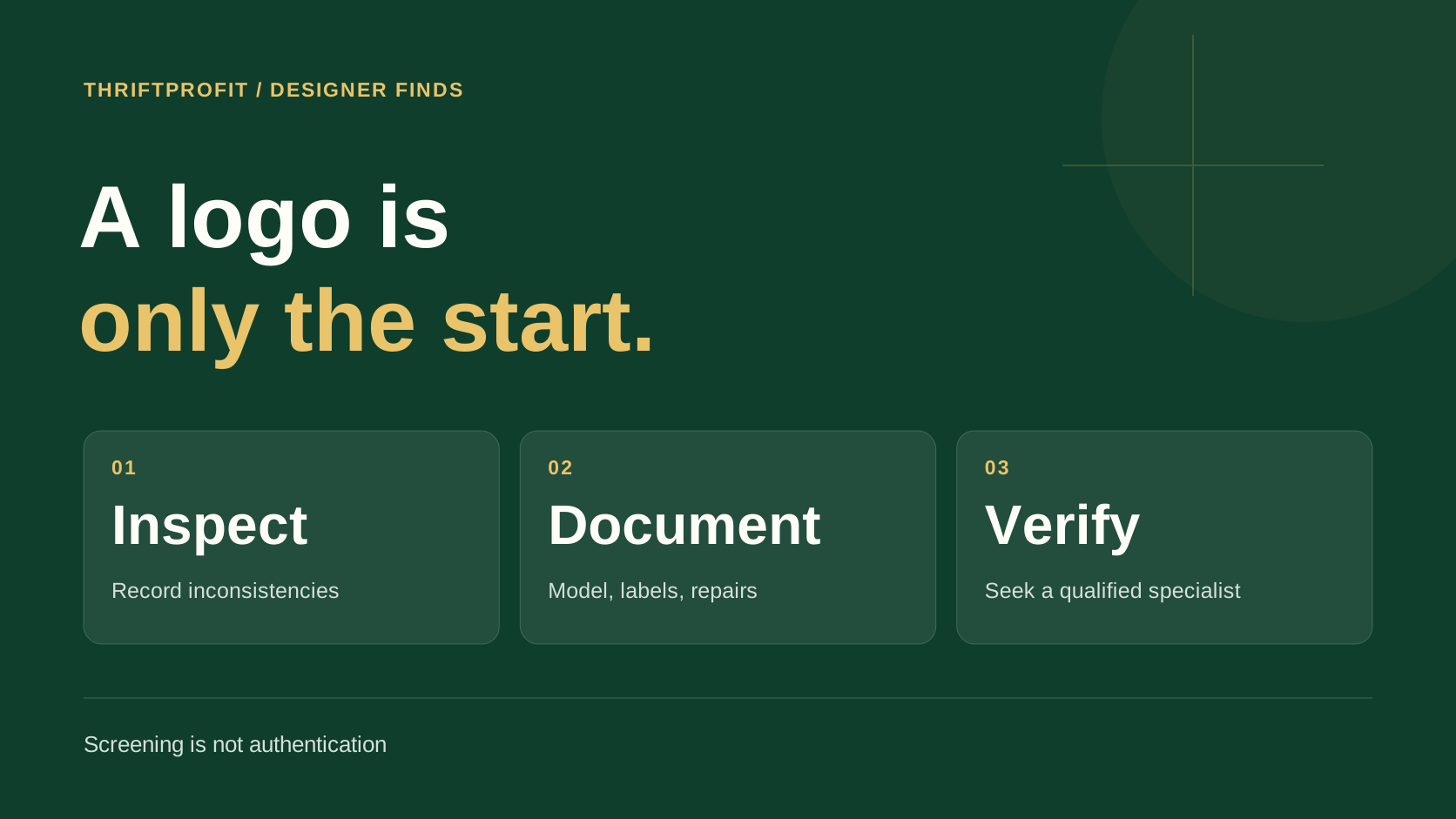
To screen a designer thrift find, compare its exact model, labels, construction, hardware and provenance with reliable references. Inconsistencies are reasons to investigate, not proof on their own. A logo, serial code or AI photo result cannot establish authenticity; unresolved items need qualified specialist review before resale.
A designer label on a thrift-store price tag can make every detail look convincing. Slow down at exactly that moment. The goal of an aisle inspection is to identify unresolved questions before paying. It is not to award an authenticity verdict after seven quick checks.
What can you actually establish in a thrift store?
You can record a model, inspect condition, photograph construction details and identify inconsistencies. You may not have the reference material, provenance or specialist knowledge needed to resolve them.
eBay's counterfeit policy requires certainty that an item is genuine before listing. If authenticity cannot be confirmed, do not list it. Calling it “authenticity unknown” does not solve that problem.
The following is editorial screening guidance for bags, clothing, shoes and accessories. It does not replace model-specific assessment.
Seven checks before buying a designer thrift find
1. Identify the exact model before comparing details
Write down what you actually know: item type, dimensions, material, labels and visible codes. A search for “designer black bag” gives you too broad a comparison set.
Try to find the exact model and relevant production period in brand-owned product information or documented specialist references. If you cannot identify it, keep that uncertainty visible. Similar-looking products can have different construction.
2. Compare labels with a relevant reference
Photograph the main label, care label, size information and any manufacturing details. Look for conflicts between them and the model you believe you have.
Avoid blanket rules such as “this brand never uses that country” unless a reliable model-specific source supports the claim. Manufacturing can vary across product lines and time. A font discrepancy may justify further research; a matching font does not settle authenticity.
3. Inspect construction and repairs
Look at seams, edges, lining attachment, pockets and areas where materials meet. Record uneven work, exposed glue, loose stitching and signs of modification.
Separate condition findings from authenticity questions. A repaired handle or replaced lining may explain a mismatch but still affect value. Do not convert ordinary wear into a counterfeit verdict, or attractive workmanship into proof of origin.
4. Check hardware against the same model
Photograph zippers, clasps, buckles, fasteners and any engravings from more than one angle. Compare placement, shape and function with an appropriate reference.
“Heavy hardware means genuine” is not a reliable decision rule. Hardware may also have been replaced during a repair. The useful question is whether the complete item is consistent with the claimed model and history.
5. Record codes without treating them as certificates
Photograph serial, date or style codes clearly, including where they appear. Check what the code is supposed to identify before interpreting it.
A number that looks plausible is only one detail. Do not assume every brand or era uses the same code system, and do not assume a missing code automatically establishes a fake. Give a specialist the evidence without inventing a conclusion.
6. Assess provenance and included packaging
Ask whether any purchase or service documentation is available. Compare the documented item with the physical one. A receipt for a different model does not resolve your questions.
Keep bags, boxes and cards in perspective: they are supporting material, not a substitute for evaluating the item. An unsupported story about where it came from should remain an unsupported story in your notes.
7. Calculate whether resolving uncertainty is worth it
Before buying, find out whether a qualified specialist covers the brand, category and era, which photos or physical inspection they need, what they charge, and what happens if the result is inconclusive.
Budget for that work and any relevant shipping. A low thrift-store price does not make the uncertainty free. If you cannot resolve authenticity within your budget and the store's return conditions, passing is a reasonable sourcing decision.
Use a decision table instead of a real-or-fake guess
| What you found | What it establishes | Next action |
|---|---|---|
| A label or code resembles a reference | A detail worth investigating | Verify the exact model and period |
| Construction differs from a reference | An unresolved inconsistency | Document repairs and consult a specialist |
| Packaging or a receipt is present | Potential supporting evidence | Check whether it actually matches the item |
| A specialist needs additional evidence | The assessment is incomplete | Supply the requested details or leave it unresolved |
| Authenticity remains unconfirmed | You cannot support a resale claim | Do not list it as a genuine designer item |
Keep research notes separate from your listing description. A tentative identification should not become a confident product claim just because you have already spent money.
Does marketplace authentication remove the sourcing risk?
eBay Authenticity Guarantee applies to eligible transactions under its program conditions. Check the current rules for your item and location. It is not a promise that every thrifted designer item will qualify, pass inspection or be safe to list while authenticity is unresolved.
Resolve the identity and authenticity questions before using sold comps to estimate value. A sale of a verified genuine item is not a valuation for an unresolved find.
Save these photos for a specialist
Capture the full front, back, base and interior; each label and code; closures and hardware; seams and edges; dimensions; damage and repairs; and any supporting documentation. Use sharp, evenly lit photographs without filters. Follow the specialist's own submission requirements when they differ.
Then complete the separate condition inspection checklist. An authentic item can still be a poor purchase because of damage, repair costs or weak demand. Identity, authenticity, condition and profit are four separate questions.
How we checked this
We checked eBay’s counterfeit policy and Authenticity Guarantee documentation. The seven checks are an editorial screening workflow, not brand-specific authentication instructions or an assessment of any physical item.
- Verified marketplace rule
- eBay’s policy requires sellers to be certain an item is genuine before listing.
- Editorial screening guidance
- Inspection clues help document uncertainty; none independently certifies authenticity.
Sources
- Counterfeit policy
eBay · checked September 21, 2026
Counterfeits are prohibited and items with unconfirmed authenticity should not be listed.
- Buying with Authenticity Guarantee
eBay · checked September 21, 2026
Authentication applies to eligible purchases and depends on program conditions, not every designer item.
Frequently asked
- Can AI authenticate a designer bag from a photo?
- A photo tool can suggest an identity or details to investigate, but it should not be treated as a certificate of authenticity. Thrift Snap does not provide designer authentication.
- Does a serial number prove a designer item is real?
- No. Treat a code as one research detail. Check whether it is consistent with the exact model and production period, then consider the physical item and provenance together with a qualified specialist.
- Can I sell a designer item as authenticity unknown?
- On eBay, only list an item when you are certain it is genuine. An authenticity-unknown disclaimer does not resolve that requirement. If authentication cannot be confirmed, do not list it.
- Does every designer item qualify for eBay Authenticity Guarantee?
- No. Eligibility depends on the item and current program conditions. Check eBay’s documentation for the specific category, transaction and location before relying on the program.