How to measure clothes for resale: six measurements buyers need
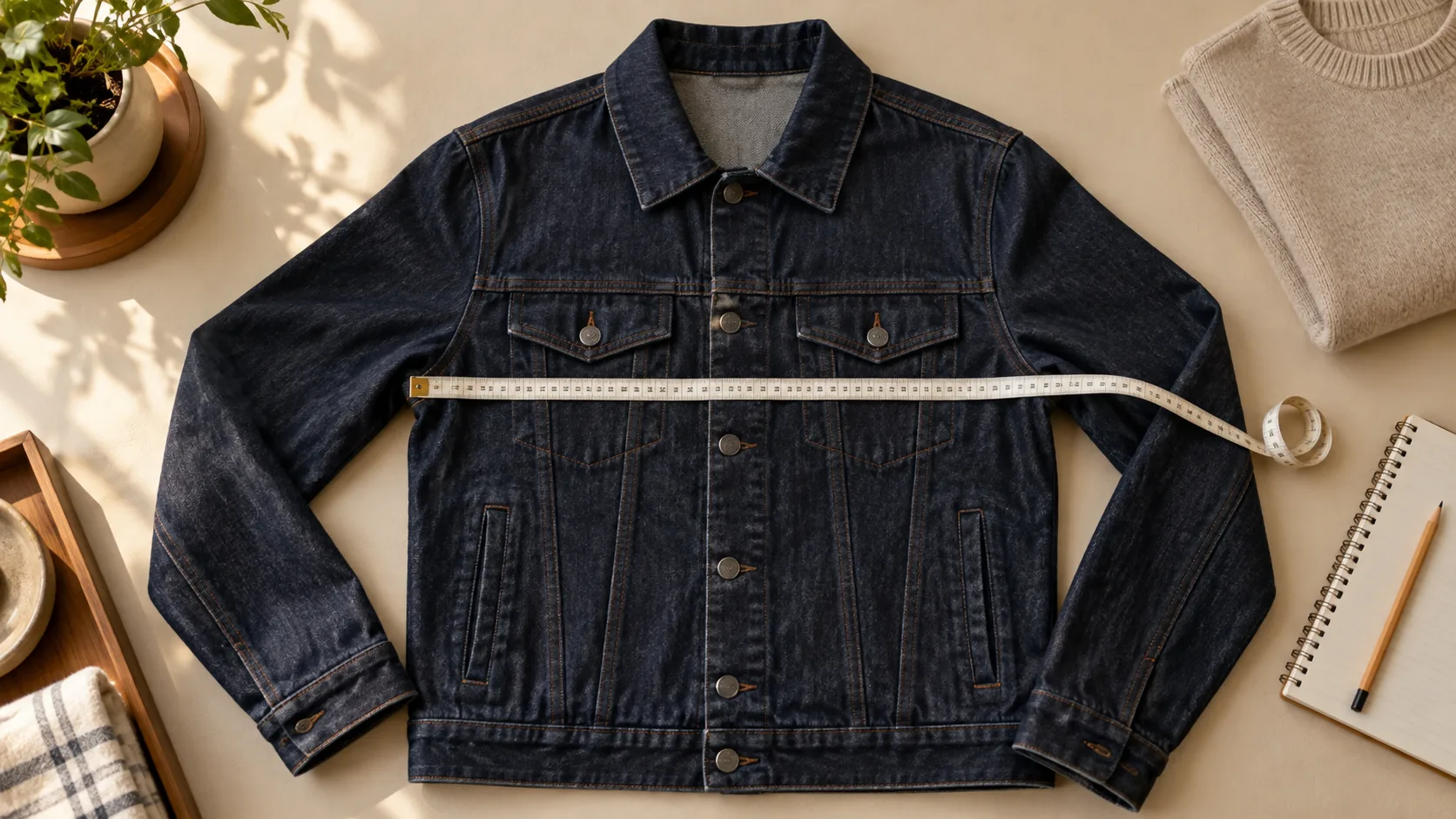
Measure resale clothing laid flat, relaxed and fully fastened. List the garment’s chest or waist across, length, rise and inseam where relevant, shoulder, sleeve and leg opening where useful. State the unit and method, then photograph the tape measure. These dimensions describe the garment, not a guaranteed buyer fit.
Short answer: measure resale clothing laid flat, relaxed and fully fastened. List the garment’s chest or waist across, length, rise and inseam where relevant, shoulder, sleeve and leg opening where useful. State the unit and method, then photograph the tape measure. These dimensions describe the garment, not a guaranteed buyer fit.
Measurements make a secondhand listing easier to search and easier to trust. They also prevent a common seller mistake: saying “fits like a medium” instead of describing the garment a buyer will actually receive.
eBay encourages helpful clothing measurements and item specifics; Mercari’s listing guidance likewise asks sellers to include dimensions. Neither source makes one universal measurement standard. The exact points below are a repeatable editorial convention for your listings.
Set up once, measure consistently
- Lay the clean garment flat on a smooth surface.
- Fasten buttons, zips and snaps unless you say otherwise.
- Smooth it without pulling or stretching the fabric.
- Use a flexible tape measure and record inches or centimetres consistently.
- Photograph the tape at the measurement point for important dimensions.
Write “measured flat” in every listing. If you double a flat width to give a circumference, say so. Do not convert a tagged size into a fit guarantee.
The six core measurements
| Measurement | Where to measure flat | Use it for |
|---|---|---|
| Chest / pit to pit | Straight across, about 1 in / 2.5 cm below each armhole | Shirts, tees, sweaters, jackets, dresses |
| Length | Highest shoulder point to bottom hem, down the front or back—state which | Most garments |
| Shoulder | Seam to seam across the upper back | Structured shirts and jackets |
| Sleeve | Shoulder seam to cuff; use centre-back neck to cuff if there is no shoulder seam and label the method | Shirts, jackets, knitwear |
| Waist | Straight across the waistband, aligned and relaxed | Trousers, skirts, dresses |
| Inseam | Crotch seam to hem along the inside leg | Trousers, jeans and shorts |
These are the defaults, not a rigid rulebook. If a detail changes fit or shipping—rise, leg opening, hem sweep, total dress length or the depth of a boot shaft—measure it too.
How to measure each clothing type
T-shirts, shirts and sweaters
- Chest: pit to pit, straight across.
- Length: high point of shoulder to hem.
- Sleeve: shoulder seam to cuff; for raglan sleeves, centre back neck to cuff and label it.
- Shoulder: seam to seam for structured styles.
Example listing line: Measured flat: pit to pit 21 in; shoulder to hem 27 in; sleeve 25 in.
Jackets and coats
Use the top measurements and add shoulder and sleeve length. For a lined coat, note the lining material and whether it changes the feel, but do not call a garment warm or waterproof unless the label or product documentation supports that claim.
For bulky outerwear, record packed measurements and weight separately when they affect the shipping quote.
Jeans, trousers and shorts
- Waist: align the waistband naturally and measure straight across.
- Rise: crotch seam to top of front waistband.
- Inseam: crotch seam to hem along the inner leg.
- Leg opening: straight across at the hem.
Example listing line: Measured flat: waist 16 in; rise 11 in; inseam 30 in; leg opening 7.5 in.
Do not assume the tagged waist equals your tape measurement. Shrinkage, wash, tailoring and age are common reasons they differ.
Dresses, skirts and jumpsuits
For a dress, include bust or pit to pit, waist if defined and total length. For a skirt, include waistband and total length. For a jumpsuit, add rise and inseam if they are likely to affect fit.
If the garment is stretchy, measure it relaxed and say that it has stretch only when you can observe it. Do not stretch it to a maximum and present that number as the normal size.
Shoes and boots
Keep the labelled size and add a clear internal or outsole measurement only if it can be taken without bending or damaging the shoe. State exactly what you measured—for example, “outsole heel to toe”—rather than treating it as a universal conversion. Photograph model, size and condition details.
What buyers need to see
Use this compact format in a description:
Tagged size: L. Measured flat: pit to pit 22 in; shoulder to hem 28 in; sleeve 25 in. Please compare with a similar garment you own. Tape measurements shown in photos.
This tells the buyer what the numbers mean without promising their fit. It also gives you a consistent record if a buyer asks a question later.
Pair measuring with condition notes
Measurements do not replace a condition inspection. Photograph and describe pilling, repairs, fade, holes, stains, missing parts and alterations. Use the thrift-store inspection checklist before you source; then add the measurements to the listing after cleaning and photographing.
Accurate item specifics, dimensions and photos make a listing easier to evaluate. The official guidance and the difference between marketplace facts and this editorial workflow are recorded below.
How we checked this
Official marketplace guidance supports including helpful clothing measurements, item specifics and accurate listing details. The flat-lay points and wording below are an editorial recording convention designed for repeatability; fit remains personal and varies by garment, fabric and brand.
- Verified listing guidance
- Marketplace guidance for helpful measurements, dimensions, item specifics and accurate descriptions is linked to the primary publishers.
- Editorial measurement convention
- The named flat-lay points and measurement order are a repeatable seller workflow, not an industry sizing standard.
- Variable fit
- Measurements describe the garment, not the buyer’s fit; stretch, cut, shrinkage and brand sizing vary.
Sources
- Selling clothes
eBay · checked September 10, 2026
Including useful clothing measurements and item specifics in listings.
- Item specifics
eBay Seller Center · checked September 10, 2026
Providing structured, accurate item details that help buyers find listings.
- Item description policy
eBay · checked September 10, 2026
Accurate description requirements for listed items.
- Creating a listing
Mercari Help · checked September 10, 2026
Adding dimensions and accurate photos when creating a listing.
Frequently asked
- What measurements should I include when selling clothes online?
- For tops and jackets, include chest or pit-to-pit and length; add shoulder and sleeve when useful. For trousers, include waist, rise, inseam and leg opening. For dresses and skirts, include bust or waist and total length. Photograph the tape and state that the garment was measured flat.
- Do I double flat-lay measurements for a resale listing?
- State the flat measurement first, such as “pit to pit: 21 in flat.” You may add the doubled circumference only if you label it clearly and calculate it carefully. The most important thing is a consistent method and a photo of the tape measure.
- Should I trust the size label or the garment measurement?
- Include both. A label helps a buyer search, while flat measurements describe the specific secondhand garment. Brand sizing, age, shrinkage, alterations and fabric stretch mean a tagged size is not a guaranteed fit.
- How accurate do clothing measurements need to be?
- Use a consistent tape, lay the item flat without stretching it and round only as much as your normal workflow requires. Say “measured flat” and show the tape in a photo. Fit remains variable, especially for stretch fabric and unusual cuts.